

On this page15 sections
Short answer
Plan the last day before the first day
A roof job is not done when the truck leaves. Before you hire, ask who will close the permit, give you the final records, explain both warranties, and take the first call if something looks wrong.
Step 01
Define “done” before work starts
A roof can look finished while the paperwork is still open. Jacksonville lists re-roofing as work that needs a permit. The city also says the permit holder must ask for each required inspection. Put both jobs in the written quote before work begins.
Ask who gets the permit, who schedules the checks, who fixes a failed check, and who sends you the last result. A clear answer now is easier to use than a promise made after the crew is gone.
The city decides which inspections a permit needs. Your contractor should explain the plan for your address without asking you to guess.
Step 02
Save the permit number and every result
Jacksonville gives the public access to permit and inspection records through JaxEPICS. The city says you can search by permit number, confirmation number, or address. Save the number as soon as the permit is issued.
Keep each result with the quote and final bill. If a check fails, ask what must be fixed and when the next check will happen. Do not rely on a screenshot with no address or permit number.
A city record shows what happened in the permit system. It does not replace your own walk-through or change the promises in your contract.
Step 03
Know what the final result does not cover
A passed city inspection means an inspection happened and the checked work met that inspection step. It is not a promise that every later roof problem will be covered.
Jacksonville says its inspection work checks construction against state and local building rules. Your contract and warranty papers cover different promises. Keep those jobs separate in your mind.
Before the last payment, ask for the final status the city requires for your permit. Then keep a copy you can find later.
 BasedOnReputation Research Department
Five records worth keeping together
Each paper answers a different question. No single record proves the whole job went well.
| Record | Why it helps |
|---|---|
| Signed quote and changes | Shows the work and price you approved. |
| Permit and inspection results | Shows the city record tied to the address. |
| Roof product list | Names the shingles, underlayment, vents, and other parts. |
| Both warranty papers | Shows who promised what and how to ask for help. |
| Final bill, photos, and messages | Keeps the job timeline in one place. |
City of Jacksonville and FTC consumer guidanceCurrent pages checked September 1, 2026
SVG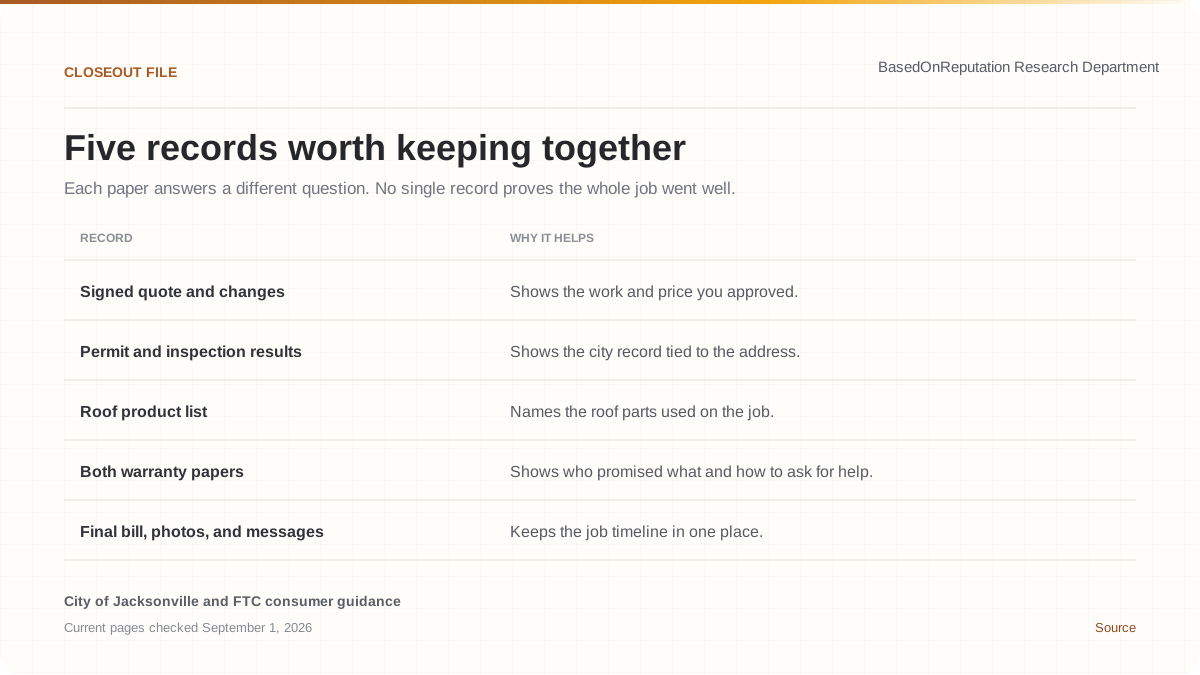
One place to compare
Have a quote or need another one?
Keep your current quote beside you to compare the scope. If you need another price, we can help you get local quotes.Step 04
Get both warranty promises in writing
A roof quote may include a product warranty from the maker and a work warranty from the roofer. They are not the same promise. Ask for the full name and full paper for each one.
The Federal Trade Commission says warranty details should be available before you buy. It also tells buyers to check what is covered, what is left out, how long coverage lasts, and how to ask for help.
Read the steps, time limits, transfer rules, and exclusions that apply to your exact roof. If a salesperson makes an extra promise, ask for it in writing. A brochure title is not enough.
Step 05
Keep one roof closeout folder
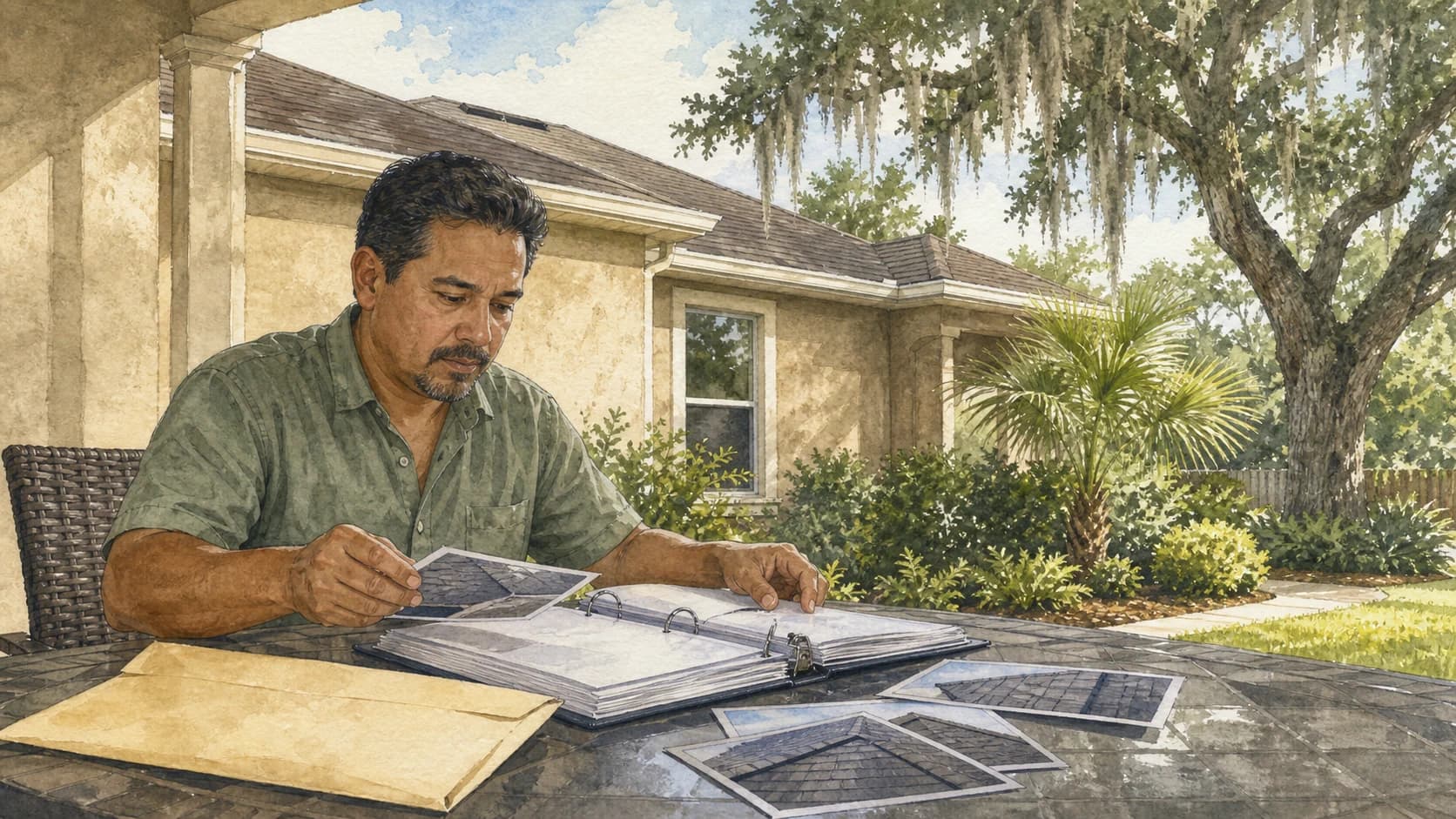
Keep the signed contract, every change, the final bill, the roof product list, the permit number, inspection results, warranty papers, and any sign-up proof. Add photos from before, during, and after the job.
The FTC tells buyers to save the warranty and receipt together. For a roof, the same simple habit makes it easier to show what you bought and when you bought it.
Save emails and text messages about changed work or later repair requests. Photos show what you saw. They do not prove what caused it, so keep the written record too.
Step 06
Do your own final walk-through
A city inspection and a homeowner walk-through have different jobs. Jacksonville says the city does not inspect cosmetic items and tells owners to do a final check. Walk the property before the last payment.
Look at the ground, driveway, gutters, vents, flashing you can see safely, and any place the crew used for materials. Do not climb onto the roof. Write down open work and send the list to the contractor.
Ask when each item will be handled and who will confirm the work is complete. Keep the answer with your closeout folder.
BasedOnReputation Research DepartmentSix questions that make aftercare real
Put the answers in the quote or contract. A clear process is more useful than a broad promise.
- 01Who gets the permit?
- 02Who asks for each inspection?
- 03How do I get the final result?
- 04What are both warranty names?
- 05What papers come before last pay?
- 06Who takes my first problem report?
BasedOnReputation editorial checklistBased on current city, FTC, and local review evidence
SVG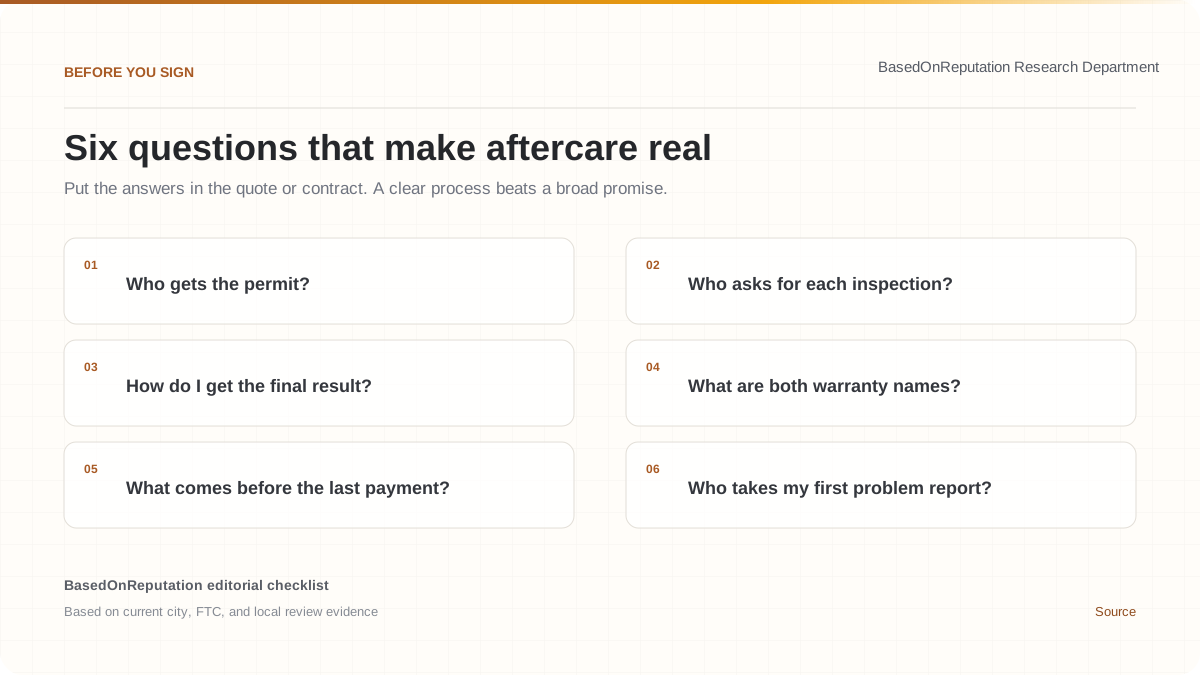
Step 07
Make the first problem report easy to follow
If you see a problem, protect people and the home first. Write down the date, weather, place, and what you can see. Take clear photos. Then tell the roofer in writing and keep a copy.
Use plain facts. Do not guess at the cause. Read the contract and both warranty papers before you demand a certain fix. The right next step depends on what the papers say and what happened.
Before you hire, ask who receives that first report and how fast the company normally confirms it. The answer shows whether aftercare is a real process or only a sales line.
Step 08
What did Jacksonville Roofing Reviews say about aftercare?
The BasedOnReputation Research Department studied 10,339 written reviews from 122 Jacksonville roofing business profiles. In that fixed set, software marked 125 aftercare and resolution text sections in 99 written reviews from 32 businesses. A separate positive project-completion signal appeared in 1,768 written reviews from 96 businesses.
A fixed set of checks was applied after the software marked the text. Topics can overlap. These numbers are not warranty claims, leak counts, defect rates, customer rates, company rankings, or predictions.
The finding supports one useful hiring question: who takes the first call after the last payment? Read the full Jacksonville Roofing Review report for the broader method and other work-quality signals.
BasedOnReputation Research DepartmentWhat did the aftercare signal include?
The unit changes at each step. These are not complaints, warranty claims, or defect rates.
Use it to askWho takes the first call after the last payment?
Jacksonville Roofing Evidence v310,339 written reviews · March 2013 to May 2026
SVG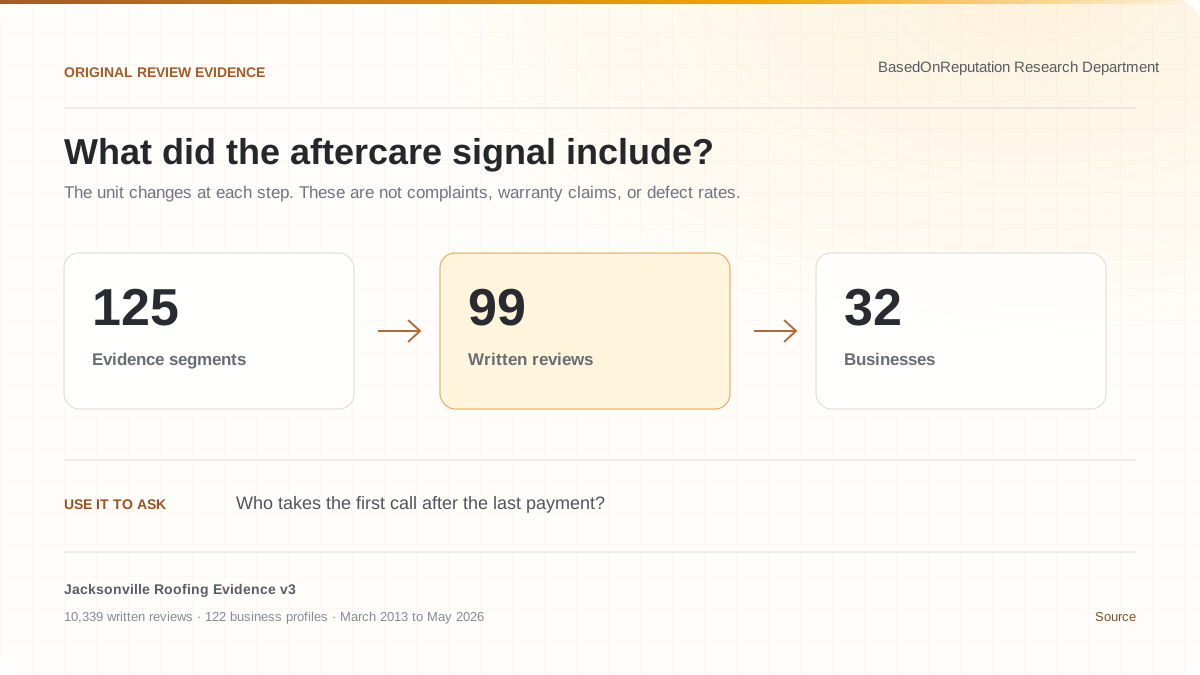
One place to compare
Have a quote or need another one?
Keep your current quote beside you to compare the scope. If you need another price, we can help you get local quotes.Before you choose
Keep these six questions beside the quote
- Who gets the permit and asks for every required inspection?
- How will I receive the final permit and inspection record?
- What is the full name of each product and workmanship warranty?
- What must I do to keep each warranty active?
- Which closeout papers will I receive before the last payment?
- Who takes the first call if I find a problem after the job?
Questions and answers
Frequently asked questions
Does a Jacksonville re-roof need a permit?
Jacksonville lists re-roofing as an alteration that needs a building permit. Ask the contractor how the rule applies to your address and who will get the permit.
How can I check a Jacksonville roof permit?
The city says the public can use JaxEPICS to search by permit number, confirmation number, or address and see inspection results.
Is a product warranty the same as a roofer warranty?
No. A maker may cover named roof products. A roofer may give a separate promise about the work. Read both full papers before you sign.
What roof papers should I keep?
Keep the signed contract, changes, final bill, product list, permit and inspection records, warranty papers, sign-up proof, photos, and written repair requests.
Sources and limits